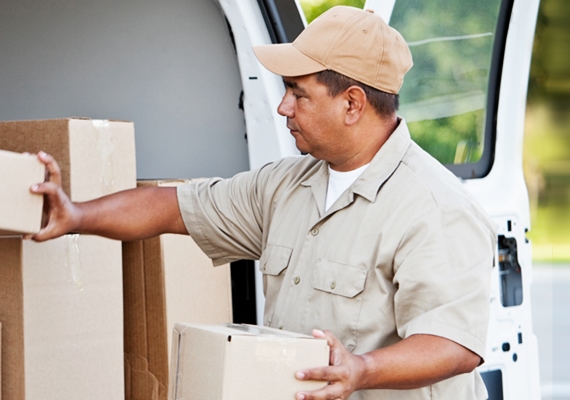
The Amazon Effect has changed consumer expectations both in breadth of options and speed of delivery. This has led to a significant increase in last mile carrier demands, as U.S. online sales — Amazon and otherwise — reached $73.2 billion in June, up 76.2% over the same month last year.1
For last mile carriers, this boom means more than just additional revenue opportunities, it also means increased risk.
Short hauls are less known about and less predictable than the traditional long haul routes of yesterday from distribution center to distribution center, or big box store to warehouse. Today’s last mile carrier is moving product from a big box retailer or warehouse directly to people’s homes.
This means more stop and go traffic both on city roads and country lanes; more opportunities to get lost and even an increase in accidents. It means greater demand for GPS devices and delivery timing has to be totally revamped. Now, a tight window must be given to the customer, instead of extended big box retail delivery hours. Freight is in smaller units and more drivers are needed.
When the last mile driver arrives at a home, the situation is unknown. Will the customer be hostile or needy of the driver? If the item being delivered is heavy, it may require a bigger delivery crew. The situation and landscape at the home is unknown, while a loading dock at a distribution center or big box retailer was built for the task.
Last mile carriers will have to move quickly to scale their operations in a safe and meaningful way – and can do so only with the resources that give them a full view of driver onboarding, training, driver behavior in the unit, vehicle maintenance, driver payment and insurance considerations.
The reliance on a technology platform to accomplish that is non-negotiable for many. And, it must take in to account the increased risks last mile carriers face as well as all shipper requirements and compliance implications involved in the lifecycle of the driver and the delivery. The best technology solutions for last mile carriers will:
- Aggregate data, risk management programs and vendor service providers
- Feature onboarding solutions for background check, drug screen, MVR pull and real time digital training
- Business solutions for drivers that are contract carriers
- Streamline and maintain HR (employee) or Contract Carrier files, shipper compliance and insurance specifications and renewals
- Collect and collate mobile app data and link to settlement and payment systems
- Improve overall ease of calculating total cost per mile by shipper
- Maintain vehicle maintenance records and driver tracking
- Have a vendor marketplace that drives value to the driver in ancillary benefits, medical, dental, vision, personal lines, life and retirement planning that ties the driver to the marketplace of the company
The right technology solution will help last mile carriers meet today’s high product delivery demand seamlessly – and set the last mile company and their drivers/carriers up for continued success, even beyond the current pandemic.
Contact your HUB Transportation expert for more information on implementing the right technology solution into your last mile operation.