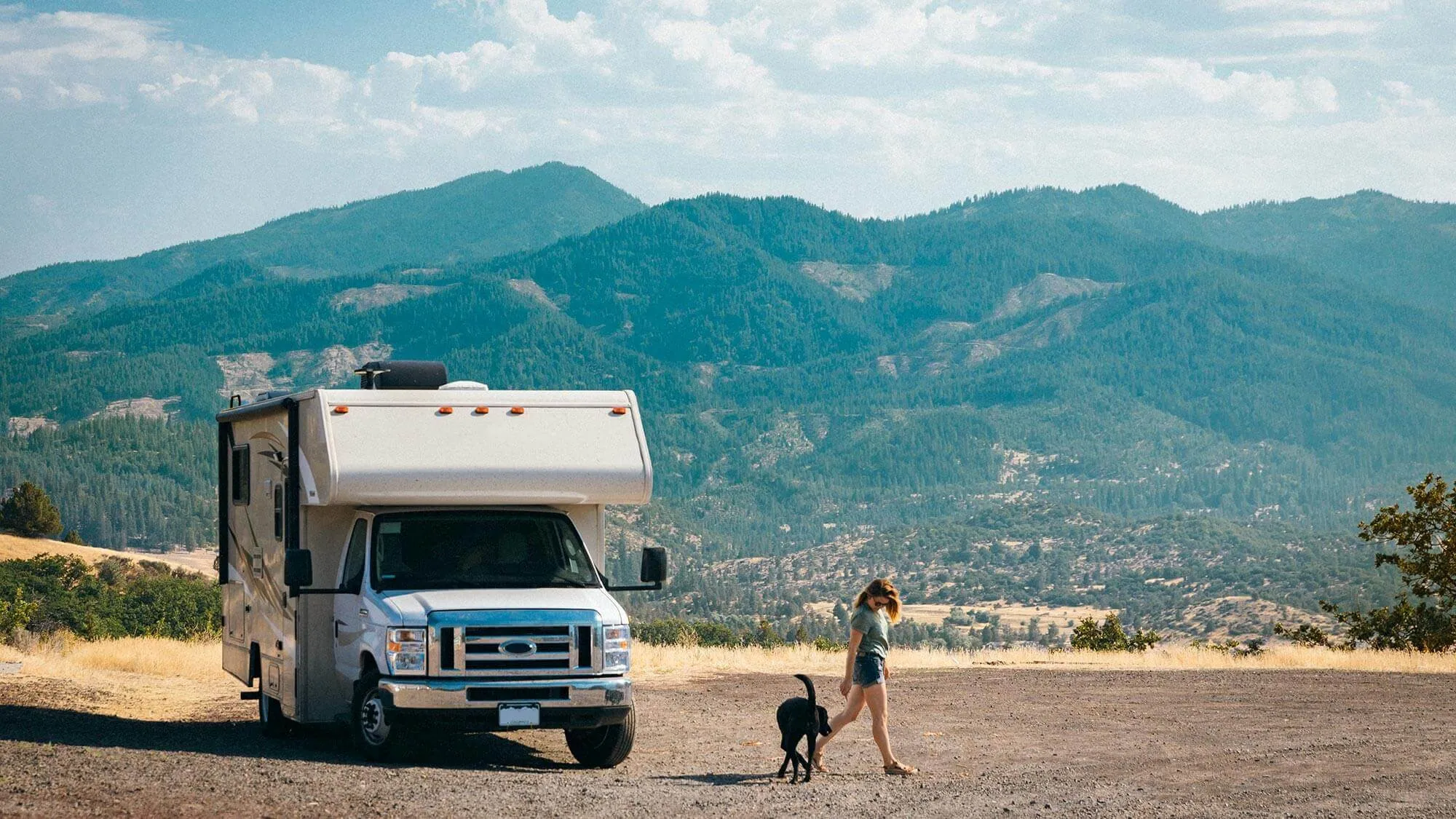
Travel looks a little different during a pandemic. Instead of commuters filling the roadways, recreational vehicles (RVs) are increasingly becoming the vehicle of choice for Americans. Peer-to-peer RV rental company RVshare, essentially an Airbnb for RVs, reports bookings have increased by more than 1600% since April.1 Even RV dealerships are seeing as high as a 170% increase in sales2 in some areas with 80% being first time buyers.3
It’s not surprising as people are seeking safe alternatives to travel. RVs are helping travelers keep their distance and avoid crowds, while also affording them the chance to be surrounded by nature – the social distancing way.
Upon researching and ultimately making the decision to either rent or purchase an RV, contact a HUB broker. Regardless of your choice, extended coverage options are worth looking into.
Choosing to rent: RV Rental Insurance Coverage Considerations
First and foremost, make sure you are renting from a reputable source who clearly states what level of coverage is included in the rental agreement – i.e. liability coverage, comprehensive and collision coverage, etc. Equally as important, before you complete your rental agreement, you will need to check if your auto insurance policy even includes extended coverage to RV rentals. In the end you’ll want to have a clear understanding of what’s all covered and who is the responsible party for payment.
Choosing to purchase: RV Purchase Insurance Coverage Considerations
You’ve made the decision to forgo renting and officially purchase an RV, congrats! But before signing on the dotted line you’ll want to think about how it will be used or even stored when not on the road when traveling. All which will determine the type of coverage is be best – full-time coverage vs. part-time or recreational coverage. Full-time coverage is suited for owners who are looking to live in the vehicle most or all the time. These policies provide similar coverage as homeowners insurance, combined with the sort of coverage you’d get from an auto insurance policy. Recreational coverage is for owners who intend to use their RVs only occasionally. It covers the vehicle while traveling or at vacation site. Regardless of choosing a full time or recreational RV policy, there are a number of different options for the types of coverage you available. Certain coverage types are built into nearly every RV insurance coverage policy, while others are generally considered extras – i.e. Vacation Liability, Custom Equipment Recreational Vehicle Medical Payments Coverage, etc.
Travel Considerations During COVID
Whether you choose to rent or purchase an RV, when it comes time to travel it’s important to keep in mind that COVID-19 cases are still being actively reported in all 50 states and you’ll want to make sure to adhere to known precautions. Also, remember that staying at home is still recommended for those 65 years of age and older and those immunocompromised or with underlying medical conditions.
Not sure where to go? Check out the CDC COVID Data Tracker for updates on infection rates by state. Don’t forget that wherever you go, you’ll have to abide by that state’s rules when leaving your RV, whether entering a grocery store, restaurant or even just at a rest stop. Check the here for state-by-state health department websites.
If you do take to the roads in your new or rented wheels, assume necessary precautions.
- Your vehicle. The CDC recommends maintaining ventilation in the vehicle whenever possible, i.e., open windows or setting the air conditioning to non-recirculation mode.
- Cleaning and disinfecting. The CDC recommends cleaning and disinfecting frequently touched surfaces regularly, including the steering wheel, gear shift, door frame/handles and seat buckles. If you can’t find disinfecting wipes, soap and water will do the trick.
- When using parking meters and pay stations, consider alcohol wipes or use hand sanitizer after, containing at least 60% alcohol or wash hands in soap and water for at least 20 seconds.
- Personal Protective Equipment (PPE). Bring masks with you as most indoor establishments country-wide are still requiring one for entry. Use hand sanitizer after touching door handles and other public surfaces.
- Rest stops. While most rest stops across the country remain open to provide respite for truckers and other vehicles carrying emergency equipment and supplies across the country, check each state’s Department of Transportation website for closure notices.
- When using the facilities at a rest stop remember to social distance and wipe down the toilet and hand washing station surfaces before use.
- Have Fun!
After having been quarantined for months it really is the perfect time to get out and explore – with precaution. Armed with PPE and taking appropriate social distancing measures, traveling can still be great fun when exploring the country by RV.
To learn more on how to secure the right RV insurance coverage option for your needs, or for a quote, contact a HUB personal insurance broker.
Get the latest information, guidance and resources on Coronavirus (COVID-19) to help you protect what matters most on our Coronavirus Resource Center.
2 https://www.wafb.com/2020/05/25/rv-sales-jump-during-coronavirus-pandemic-says-association/
3 https://weather.com/health/coronavirus/news/2020-07-15-coronavirus-rv-sales-travel-evacuation-camper