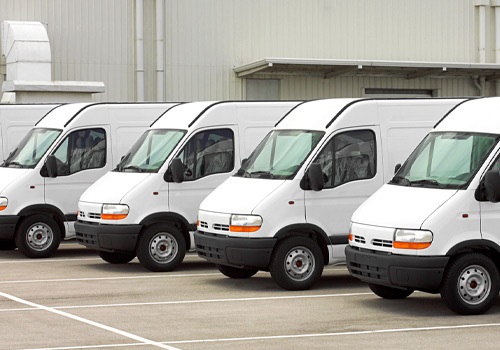
A construction company’s vehicle fleet was once just another line item in the annual budget. Not anymore.
In fact, approximately 20 percent of a company’s fleet will be involved in an accident this year,[1] costing employers as much as $56 billion annually.[2] Beyond repair dollars, this number reflects an increase in insurance deductibles, higher premium rates, significant legal liabilities, negative publicity, worker’s compensation costs and project delays.
An increase in construction accident claims can be attributed to both distracted driving and driving without appropriate authorization.
When the lack of materials on the job site slows the construction schedule, the urgency for drivers to deliver materials increases significantly, regardless of time or traffic. This leads to hard breaking, speeding and aggressive driving. And, when the delivery truck is large, or includes a flatbed, it increases the risk and severity of damage when an accident does occur.
How to reduce transportation claims costs
To both minimize accidents and improve your construction company’s standing with insurance companies, consider the following strategies:
- Know when drivers need a CDL. Licensing nuances of each province may require a specialized class of license. Make sure you know the requirements of each province in which you have operational drivers and that your drivers are appropriately licensed for the truck and trailers combined weight rating. When a driver gets pulled over and doesn’t have the appropriate license, the vehicle can be impounded. When there is a fatality or serious injury and the company driver isn’t licensed to operate the vehicle, claim costs can exceed policy limits.
- Develop a formal fleet safety program. This should include hiring qualifications for drivers, a formal drug program, regular maintenance inspection criteria, accident reporting rules, a detailed load securement policy, disciplinary actions for accidents, tickets and aggressive driving and most importantly, driver selection and enforcement.
- Institute MVR monitoring. At a minimum, make sure you’re hiring drivers that have a clean motor vehicle record (MVR). Conduct MVR monitoring both at onboarding and annually, if not monthly via an MVR monitoring service. (See MVR monitoring blog.)
- Train your drivers. Even if you only employ a few drivers, defensive driver and load securement training is critical to reducing accidents and tickets. Do so both when the driver is hired and annually thereafter.
- Employ technology that monitors drivers regularly. Studies show that drivers who know they’re being held accountable via in-cab telematics are more careful on the road. As crash claims increase, more insurance carriers are either requiring in-cab telematics or providing favourable pricing for those construction companies that do.
Contact your HUB Construction expert to find out how you can maintain a safe fleet and reduce auto insurance costs.
[1] https://www.constructionequipment.com/true-costs-fleet-accidents
[2] https://www.fleetowner.com/safety/article/21702332/vehicle-accidents-cost-companies-57b-in-2017