Production Insurance
Production insurance solutions built by advisors who know where the risk sits
Film, television and streaming productions run on a risk architecture that resets with every greenlight. When a lead actor is incapacitated, a set shuts down or an errors and omissions (E&O) claim surfaces before distribution, the consequences are immediate. HUB’s advisors build film production insurance programs around what it takes to keep a production moving when moments like this happen.
Stay Ahead of Industry Challenges
Where the production lifecycle creates risks that standard commercial coverage cannot reach
Coverage gaps are the easiest to see at the moment of a claim and the hardest to fix in the moment. HUB advisors work with independent producers, line producers and studio risk managers to review scripts, place cast insurance and navigate E&O clearance timelines before agreements are jeopardized.
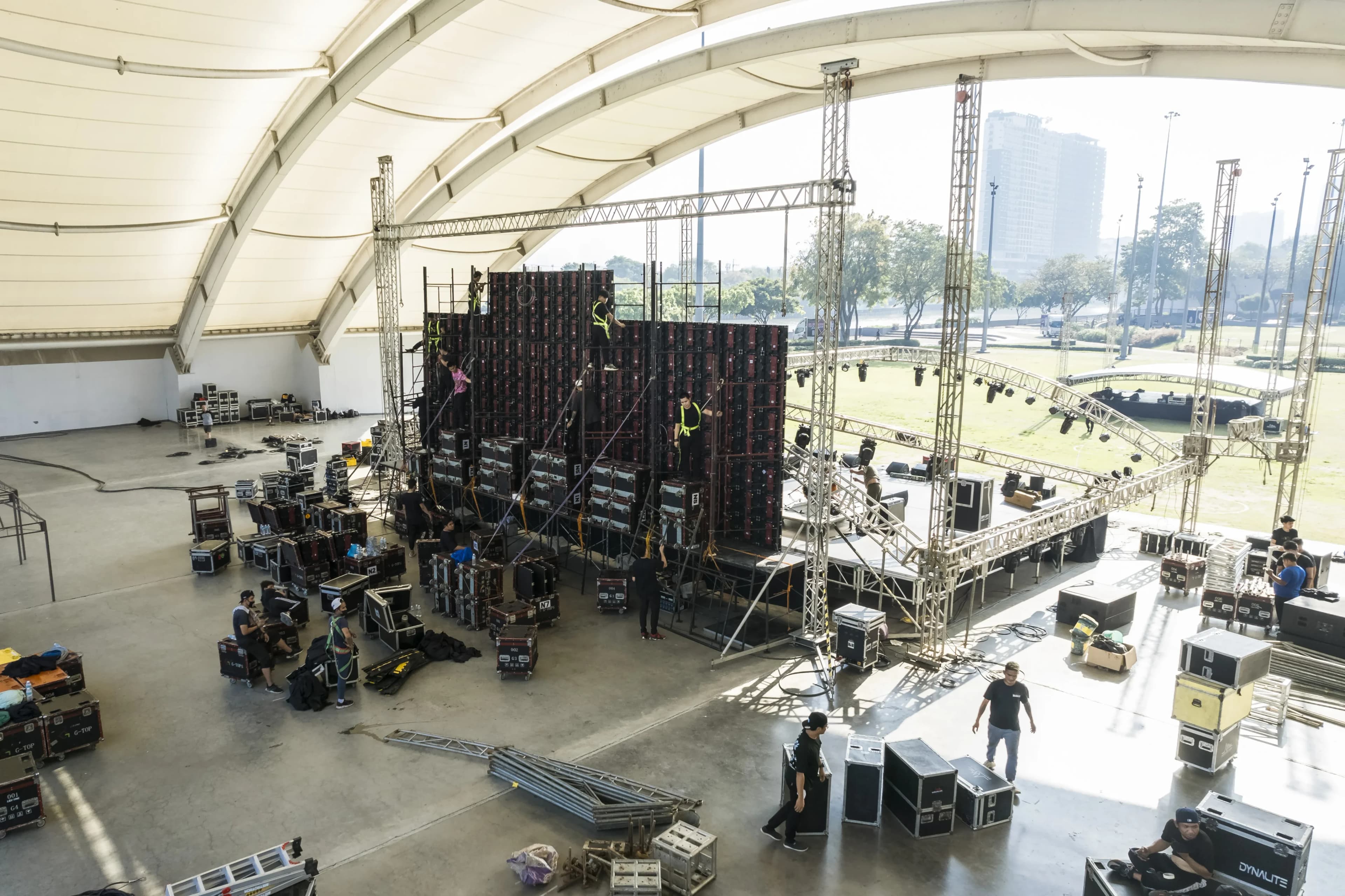
Film and television sets are complex workplaces where a safety failure produces two losses at once: the human cost of an injury and the production cost of a shutdown. A shutdown ordered by a provincial workplace safety regulator or a court generates carrying costs that accumulate against a budget under pressure.
HUB's script and budget review identifies special production risks before principal photography, reducing the chance an on-set incident becomes a shutdown. Workers' compensation placement, including Guild Travel Accident coverage, is the coverage complement. Cast insurance ensures a principal cast member's incapacity does not threaten completion.
A culture of safety, not equipment, is what determines whether a production stays on schedule. That culture is built before production begins. HUB's advisors review scripts and budgets before production starts, when the outcome can still change.
Productions that embed safety planning in pre-production, with script review, workers' compensation and cast insurance in place before principal photography, execute their schedules without the shutdown risk that turns an on-set incident into a financial crisis.
A production's budget depends on specific cast members, locations and departments performing on schedule. When a lead actor's illness forces a reshoot, a permit is revoked or equipment failure destroys footage, the production incurs extra expense to recover. Independent productions face this risk with thinner financial cushions.
HUB’s plan can include cast insurance that covers additional costs when a principal cast member becomes incapacitated. Negative/faulty stock coverage addresses lost or destroyed production output. Extra expense coverage reimburses the costs of completing a production after an insured loss, protecting independent productions when a significant disruption occurs mid-shoot.
Independent productions are where these claims determine whether a project finishes. A studio can absorb a major expense event; an independent production often cannot. Cast insurance and extra expense coverage are the difference between completing and not.
Productions with cast insurance, negative/faulty stock and extra expense coverage in place before principal photography absorb the consequences of cast unavailability or equipment failure, protecting the distribution timeline and the relationships the production depends on to complete.
Every film or television production faces IP liability at distribution: copyright infringement, defamation, right of publicity and music licensing failures can generate damages exceeding the budget. E&O coverage is required by every major distributor. Streaming and AI-assisted tools have made the placement timeline more complex.
HUB designs E&O coverage tailored to each production's distribution platforms and jurisdictions is the foundational solution. Script and budget review identifies IP clearance issues while there is still time to resolve them. For streaming content production insurance with global distribution, placement must reflect the international IP environment.
Productions that treat E&O as an afterthought are surprised by a placement problem weeks before release. The E&O review has to happen early, while there is still time to clear the issues the underwriter will flag.
Productions that engage E&O advisory at the pre-production stage, with script review and confirmed placement before distribution commitments are finalized, reach distribution without the delays and coverage gaps that hold a completed production hostage.
Tailored Risk Solutions for Your Industry
How HUB structures production insurance across every stage of the production lifecycle
A production insurance program is not a single policy; it is a coordinated set of coverages in place at the right stage of the production lifecycle. HUB's approach structures the full package from pre-production through distribution, with active advisory through principal photography.
The standard production insurance package assembles multiple coverages that correspond to the specific risk stages of a production: cast insurance for principal photography, negative/faulty stock and digital media coverage for loss of footage, extra expense coverage for completion following an insured loss, third-party property damage for location shoots and workers' compensation for the production workforce. For production companies without studio infrastructure — including independent producers and streaming platform content operations — HUB's advisors build the complete package, confirm it meets the distribution agreement's insurance requirements and manage the compliance obligations that the production's vendor and location contracts create. Pre-production is when gaps in this package are most cost-effectively closed; claim time is the worst possible moment to discover a missing coverage. HUB structures film production insurance and television production insurance packages using the same coordinated approach, regardless of medium or budget scale.
Cast insurance is the single most consequential production-specific coverage — the one that determines whether a production completes when a principal cast member becomes incapacitated. HUB places this coverage at both major and independent production scale, with limits calibrated to the actual financial exposure of each production's schedule: the reshoot costs, the cast and crew holding costs and the schedule extension costs that a key incapacity triggers. Extra expense coverage extends this protection to the broader range of production disruption events: location permit revocations, equipment failures that destroy footage, third-party disruptions that force a production off schedule. For independent productions without studio-level contingency reserves, the combination of cast insurance and extra expense coverage is the financial foundation that makes completion achievable even when something significant goes wrong. This combination is the backbone of independent film insurance programs, where contingency reserves are thinnest.
Media E&O coverage protects a production against IP-related claims at distribution: copyright infringement, defamation, right of publicity violations, music licensing failures and claims arising from AI-assisted production tools. HUB's E&O advisory begins at the script stage: reviewing the content for IP clearance issues that can be resolved during production, before they become underwriting conditions that delay placement. For productions distributing internationally or on streaming platforms with global reach, E&O placement must address the jurisdictional scope of the content's distribution, and HUB's worldwide network provides placement capability across the international markets that modern productions require. Music licensing clearance — synchronization and master use rights for any music in the production — is a specific E&O risk reduction step that HUB's advisors address as part of every production review. This also applies to streaming content production insurance placements, where distribution spans multiple platforms and territories.
Productions that shoot across provinces or internationally face a compliance architecture that changes at every jurisdiction: workers' compensation laws vary by province, union agreement requirements differ by territory and international locations require foreign workers' compensation, administered provincially through Workers' Compensation Boards (WCBs), and Guild Travel Accident coverage meeting Alliance of Canadian Cinema, Television and Radio Artists (ACTRA) and Union des artistes (UDA) minimums and compliance with local health and safety regulatory frameworks. HUB's global relationships enable production insurance coordination wherever productions travel. HUB's entertainment advisors are available whenever and wherever needed, ensuring that a production working across time zones does not lose advisory access when decisions must be made on set.
Special production risks — aircraft, watercraft, animals, pyrotechnics, vehicles used in stunts — fall outside standard production package coverage and require specific endorsement or separate placement identified through script and budget review. HUB's pre-production script review process identifies these elements before principal photography begins, confirming that the coverage architecture matches the production's actual hazard profile rather than a generic assessment. Provincial workplace safety compliance advisory for production environments, union safety protocol alignment and the engagement of specialist underwriters for productions involving practical effects are components of HUB's pre-production risk management capability, addressing set safety as both a compliance obligation and a production continuity risk before the camera rolls.
Industry Insights
Production insurance insights and research