High-Risk Live Events Insurance
Moving high-risk live event producers forward through elevated hazard and complex liability
High-risk live event producers — from motorsport circuits to stunt show liability insurance and extreme sports event liability — need specialist surplus lines coverage, market access and pre-event risk planning that standard brokers cannot provide. HUB’s Entertainment & Sports advisors bring the specialty market relationships this niche demands.
Stay Ahead of Industry Challenges
Where event design creates insurance challenges that standard markets cannot handle
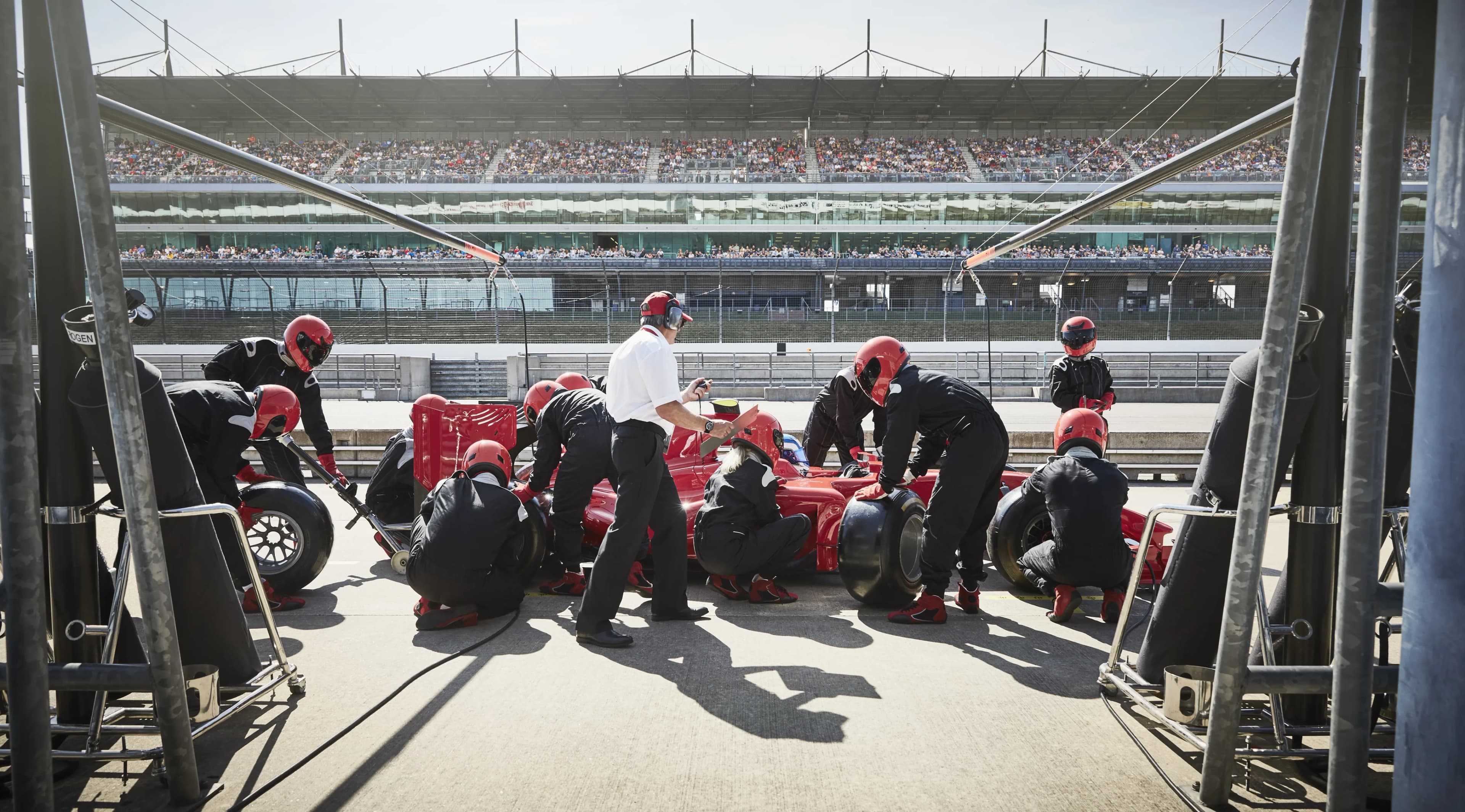
Event producers who run motorsport circuits, obstacle courses and stunt spectacles know that their insurance challenges begin where standard live event coverage ends. Participant and spectator bodily injury risk is built into the event concept, requiring carrier relationships and pre-event planning from advisors who know this niche.
High-risk live event producers carry direct responsibility for the safety of participants and audiences at events where physical danger is a design feature. Executing a coherent safety plan across multiple contracted parties without a unified command structure creates execution gaps that expose the event to liability.
HUB’s event risk planning capability brings pre-event safety assessment, vendor and contractor liability coordination and development of activity-specific trigger plans covering extreme sports event liability, weather emergencies and structural failures — aligning all contracted parties’ insurance obligations with the event’s safety architecture.
The producers who run high-risk events well have a safety culture that starts long before load-in. When claims occur on these events, they almost always trace back to a planning failure, not a freak occurrence.
Producers with robust pre-event safety planning, aligned multi-party coverage programs and a rehearsed incident command structure can execute complex events confidently — and respond effectively when the unexpected occurs — without exposing the event to regulatory shutdown or post-incident liability.
The market for motorsport event insurance and obstacle course race insurance operates through specialty and surplus lines carriers where capacity is limited and underwriting criteria is event-specific. Producers without experienced broker advocacy and documented risk management credentials face placement challenges, exclusions and premiums that stress event economics.
HUB’s access to surplus lines and specialty entertainment carriers — including markets experienced in motorsport, extreme sports and participant injury insurance live events — combined with HUB’s ability to document risk management quality for underwriters, delivers competitive placement where generalist brokers cannot.
Placement in this market rewards preparation. Producers with documented safety plans, prior loss histories and venue assessments get materially better terms than those who arrive at renewal with only basic event specs.
Producers who approach renewal with documented risk management credentials and experienced specialty broker advocacy achieve more favorable placement, fewer exclusions and greater confidence that their program will respond as intended when a claim arises.
The regulatory environment governing public safety at high-risk live events continues to evolve — with permitting requirements, crowd density standards and safety plan mandates updated in response to high-profile incidents. Producers who cannot demonstrate insurance-permit alignment face permit revocation, venue access challenges and personal liability.
HUB's advisory work in event risk planning covers pre-event safety plan review, permit condition analysis and crowd safety consultation, so compliance is addressed before an event happens, not after.. Ensuring coverage terms align with evolving permit requirements and documenting that alignment for permitting authorities is part of every engagement.
Producers surprised by permit condition changes are the ones who do not have an advisor reviewing their safety plans annually. Permitting and insurance are not separate conversations in this business; they must be read together.
Producers with current, permit-aligned coverage programs and documented safety plan compliance are better positioned to secure and renew event permits, maintain access to preferred venues and defend their duty of care posture when incidents trigger regulatory or legal scrutiny.
Tailored Risk Solutions for Your Industry
How HUB structures programs around the full risk architecture of high-hazard events
A standard liability program cannot carry the risk weight of a motorsport event, an obstacle course race or a pyrotechnic spectacle. HUB builds programs that span specialty liability placement, multi-party coordination and regulatory compliance because each component depends on the others to perform when a claim occurs.
High-risk live events cannot be insured through standard admittedgeneral liability (GL) markets — the activity-specific bodily injury exposure requires surplus lines and specialty entertainment carriers with underwriting experience in motorsport event insurance, obstacle course race insurance and participant-driven event formats. HUB’s access to these markets includes participant injury insurance live events coverage, spectator liability structured for the elevated foreseeability of injury at high-hazard events, event cancellation insurance extreme sports provisions and excess and umbrella layers to satisfy the higher GL limits required by venues and sanctioning bodies. Producers with organized and current risk management documentation (safety plans, incident histories, venue assessments) achieve materially more competitive terms in this market.
Risk management quality and coverage placement quality are evaluated simultaneously by underwriters in specialty markets. HUB’s event risk planning capability brings pre-event safety assessment, mass casualty incident protocol review, exclusion zone design consultation and trigger chart methodology for weather, structural and crowd-density hazard thresholds. This advisory work strengthens the producer’s safety posture, improves underwriter confidence and, critically, creates a documented record of the producer’s duty of care that becomes material evidence if a post-incident liability claim is pursued.
A single high-risk live event involves producers, venue operators, equipment vendors, stunt coordinators (whose stunt show liability insurance must be confirmed and aligned), medical staff, security contractors and potentially participant registration entities — each with their own insurance obligations and each potentially named in a claim following an incident. HUB coordinates the coverage architecture across all contributing parties: confirming additional insured status and certificates of insurance, reviewing contractual risk transfer provisions and ensuring that no contributing party’s coverage gap becomes the event producer’s uninsured exposure. Coverage continuity across load-in and load-out (periods when venue liability frequently transfers between parties) is a specific focus of this coordination.
Weather disruption affects all outdoor live events,but at high-risk live events, weather does not simply threaten revenue and entertainment continuity. It increases an already elevated physical safety risk. A rain-slicked track surface at a motorsport event, high winds during an aerial stunt sequence or lightning near an outdoor obstacle course create hazards that require weather risk management protocols layered on top of the existing activity risk management plan. HUB’s severe weather action planning methodology, including venue-specific trigger thresholds and predetermined response protocols, addresses weather as a compounding physical hazard, not just as an event cancellation trigger.
Motorsport event insurance programs for events governed by sanctioning bodies such as the SCCA, NHRA, IMSA or FIA require coverage endorsements and safety plan formats that reflect those bodies’ specific compliance standards. Events in jurisdictions with active fire marshal and mass casualty permitting requirements must demonstrate that their insurance program aligns with permit conditions, not just that coverage exists. HUB’s advisors work with producers to review permit requirements ahead of placement, identify coverage terms that may conflict with permit conditions and document the alignment between the producer’s safety program and the applicable regulatory framework. This alignment work reduces permit revocation risk and creates a defensible record for post-incident regulatory review.
Industry Insights
High risk live events insights and research